

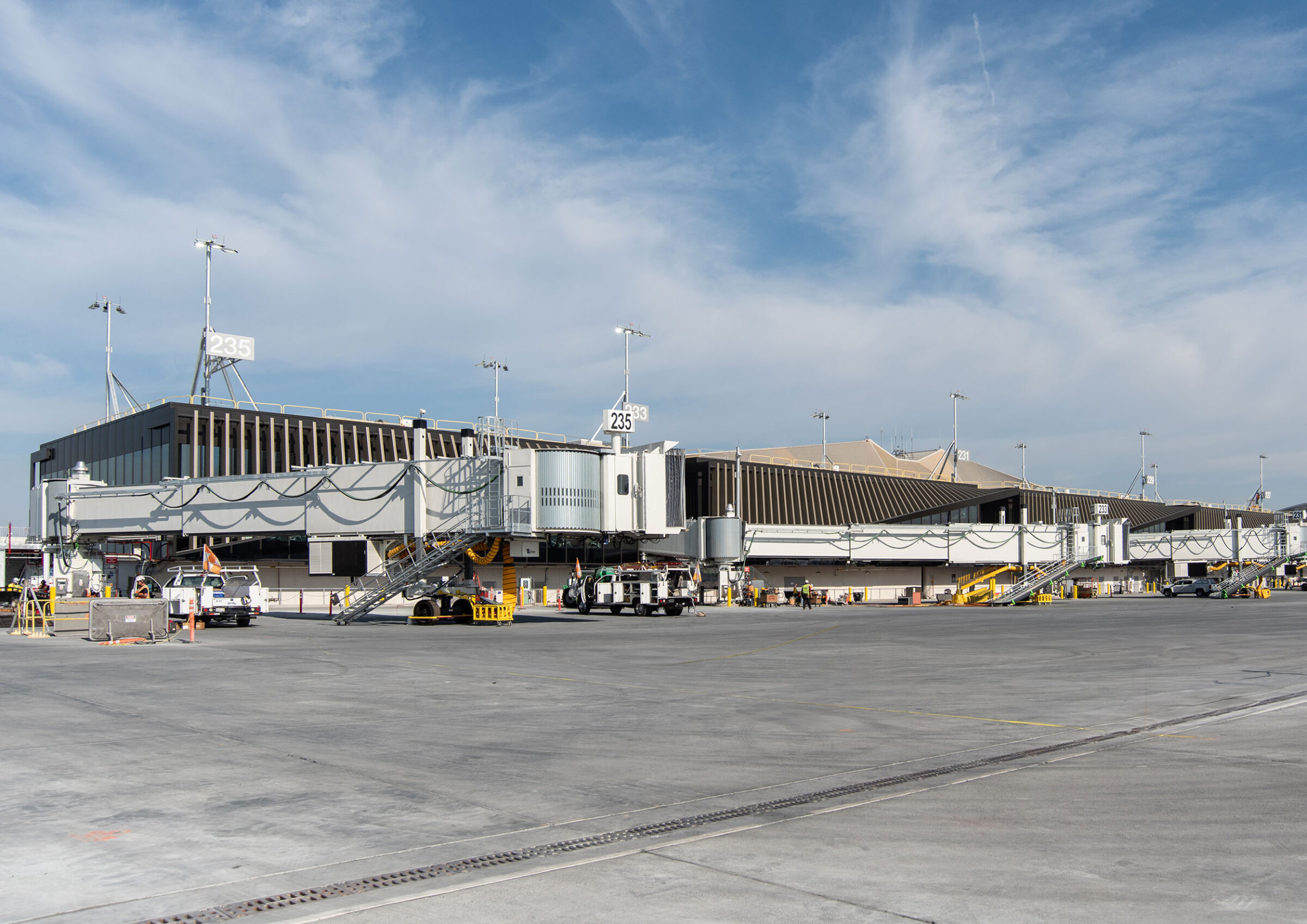
Midfield Satellite Concourse (MSC) South at LAX Officially Opens
Projects
Read More

Celebrating 100 Years of integrity, innovation, and lasting relationships: valuing people, building dreams!


Celebrating a CENTURY of valuing people and building dreams!
This once-in-a-lifetime milestone is made possible by the commitment of our employee-owners and through relationships built over time with our clients and partners.
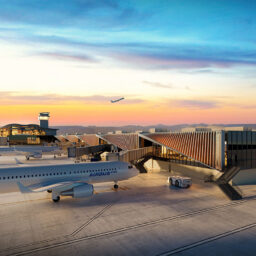
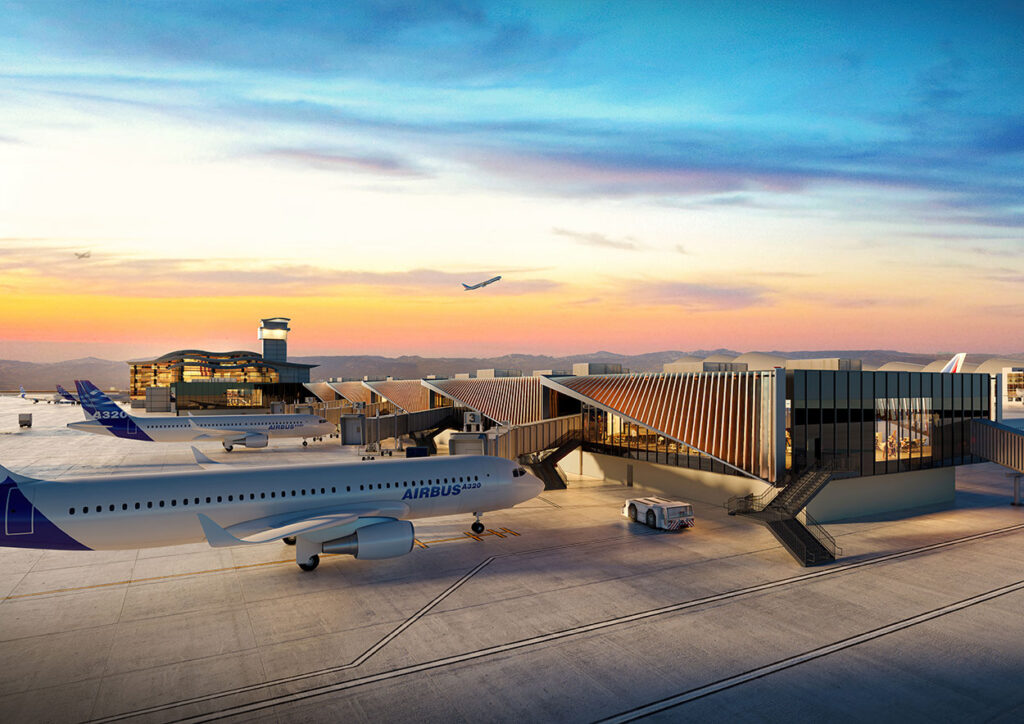
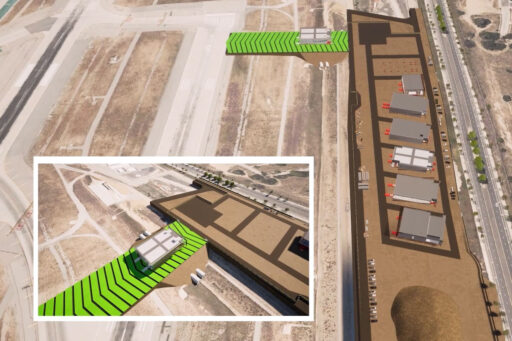
MSC South rendering (Photo credit: Los Angeles World Airports)
Marking a “Century of Building Dreams” with successful completion of LAWA’s Midfield Satellite Concourse (MSC) South, a first-of-its-kind concourse at one of the world’s busiest airports.
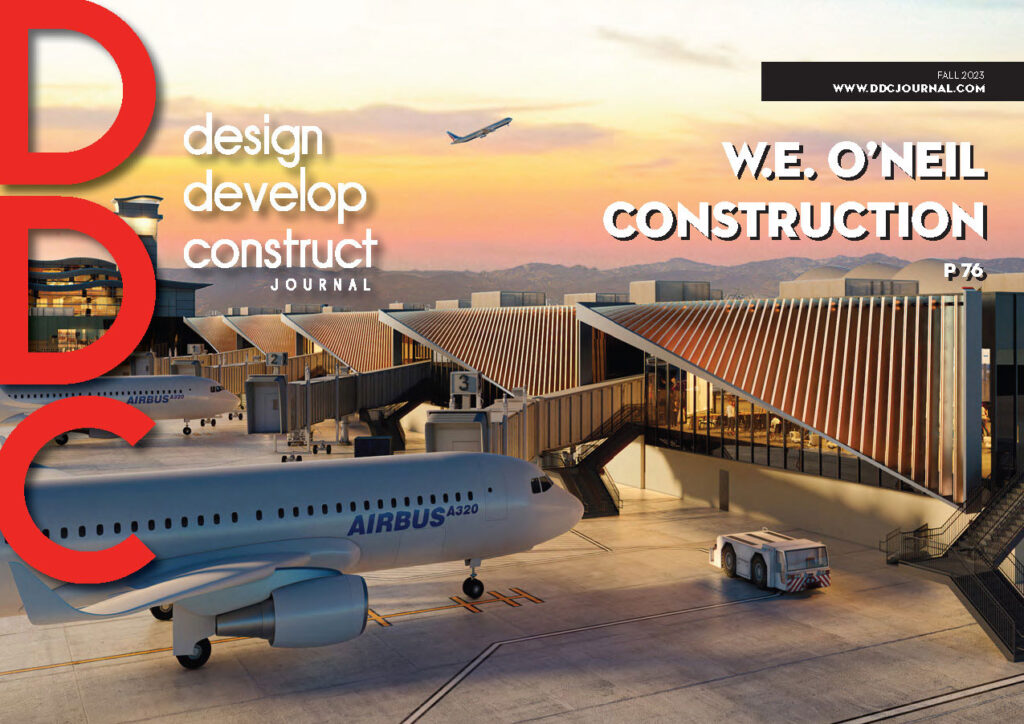
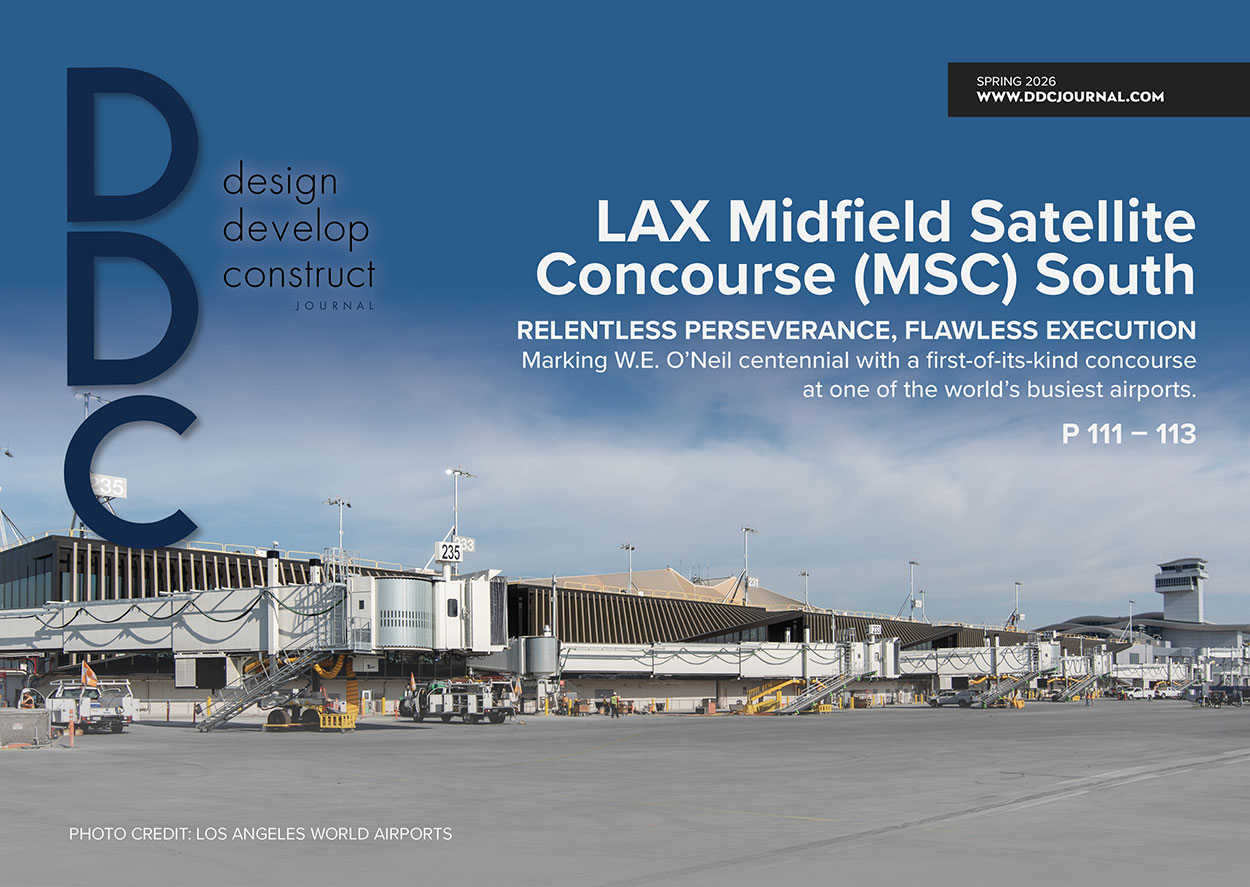
Design Develop Construct (DDC) Journal’s Spring 2026 edition included a feature telling the story of LAX’s Midfield Satellite Concourse (MSC) South: its conception, execution, and successful completion.
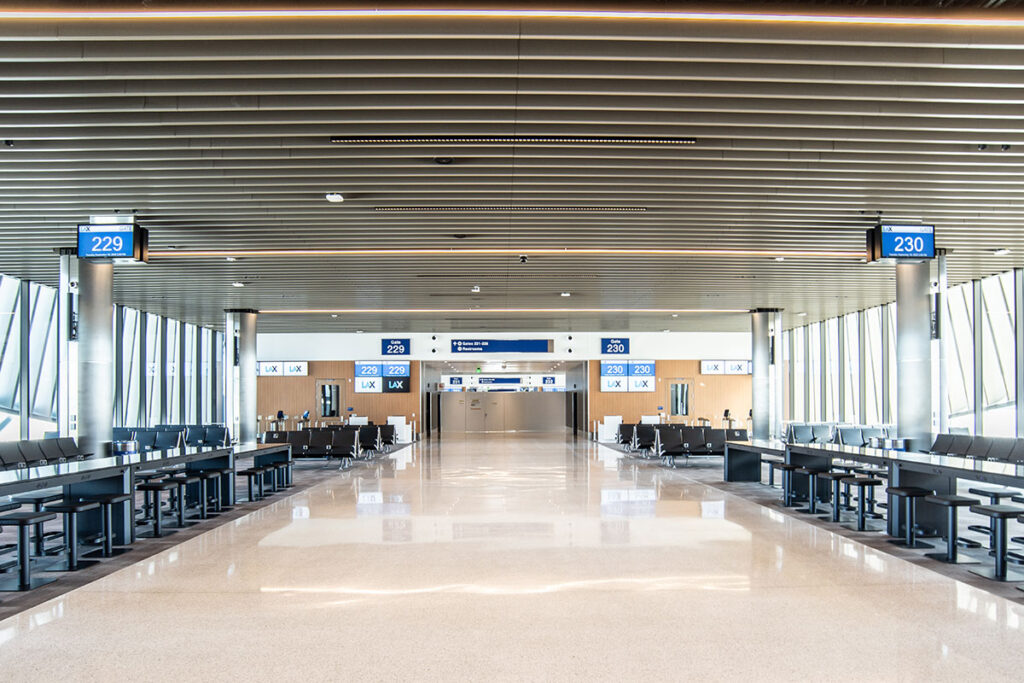
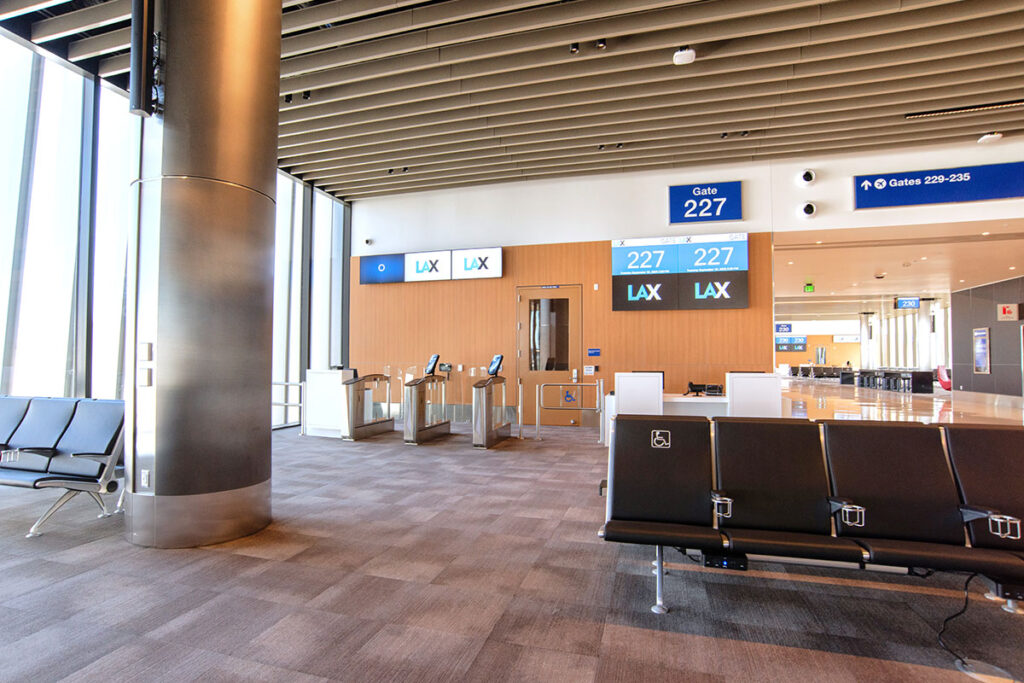
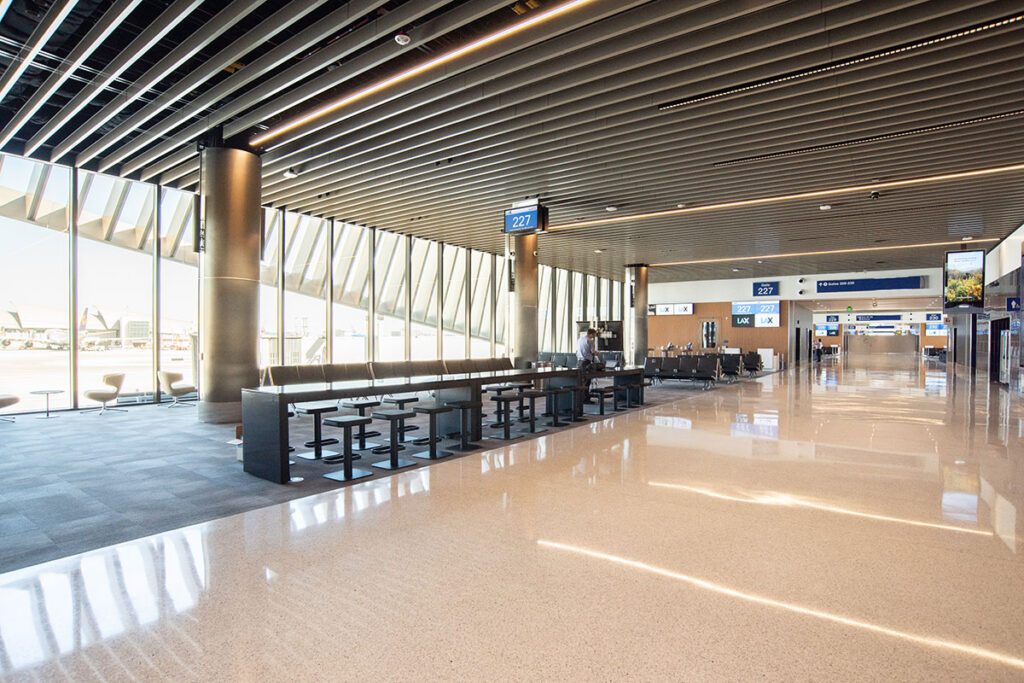
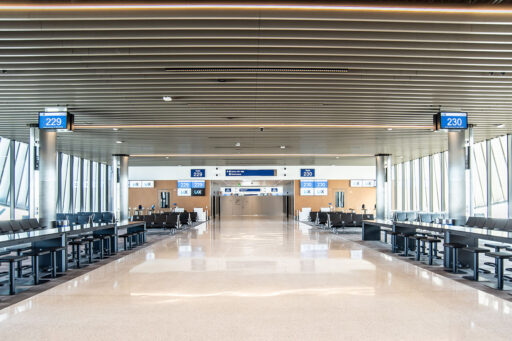
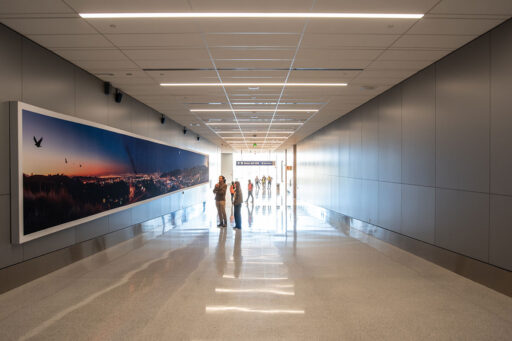
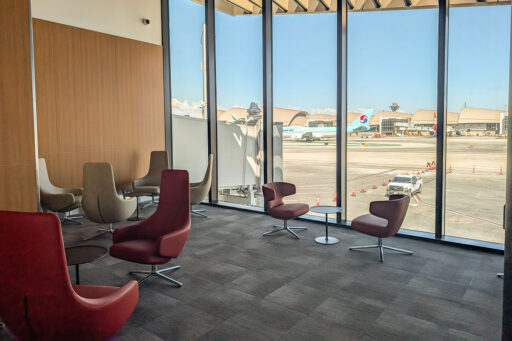
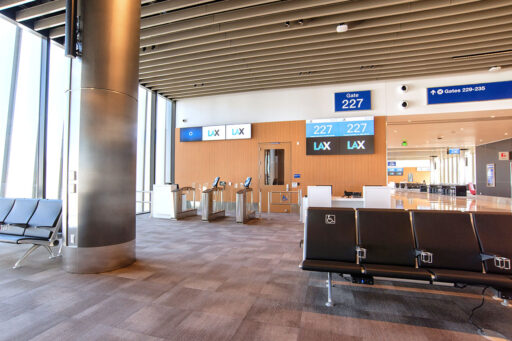
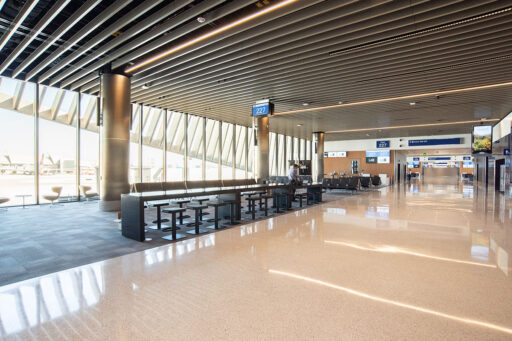
MSC South began welcoming guests in October 2025, extending the West Gates at Tom Bradley International Terminal with eight new narrowbody gates and 146,000 square feet of purpose-built space. MSC South’s successful completion reflects W.E. O’Neil’s century of construction excellence as we celebrated our 100th anniversary, underscoring a legacy of innovation and marking one of the company’s most significant, complex aviation expansions to date.
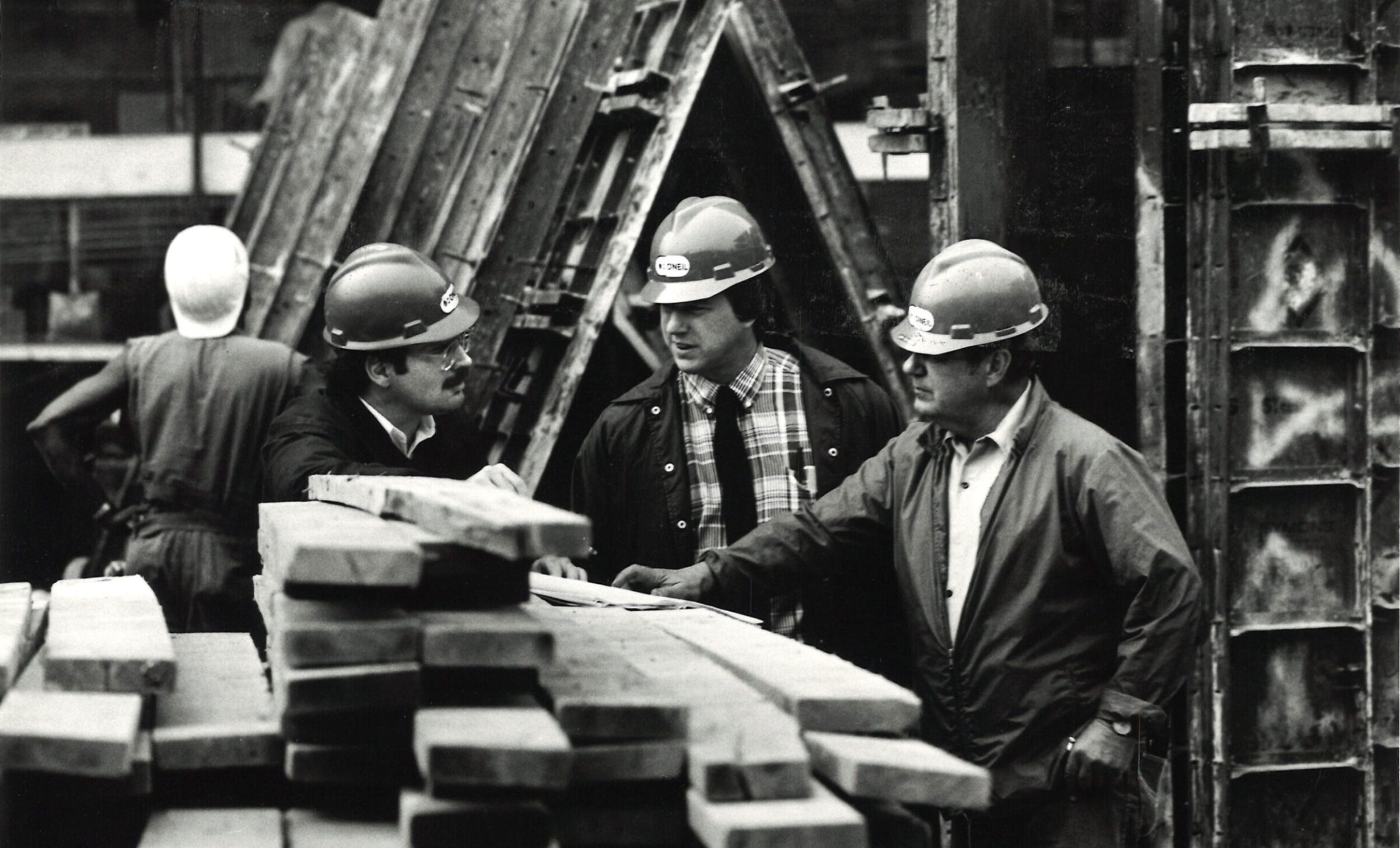
Founded in 1925 by William Edward O’Neil, W.E. O’Neil has grown from our humble beginnings in Chicago into a 100% employee-owned general contractor generating $1.5 billion in annual revenue. The company operates nationwide with 13 offices across six states, having built in 35 states, and ranking among Engineering News-Record’s Top 400 General Contractors.
As CEO John Finn shared with DDC Journal, “We build great relationships—internal and external. We believe in that wholeheartedly. That’s how we’ve become a 100-year-old company.” John added, “Eighty percent of our clients are repeat because we value that relationship. One of the things I’m most proud of is our people. Our people are dedicated to our clients’ and our design partners’ vision.”
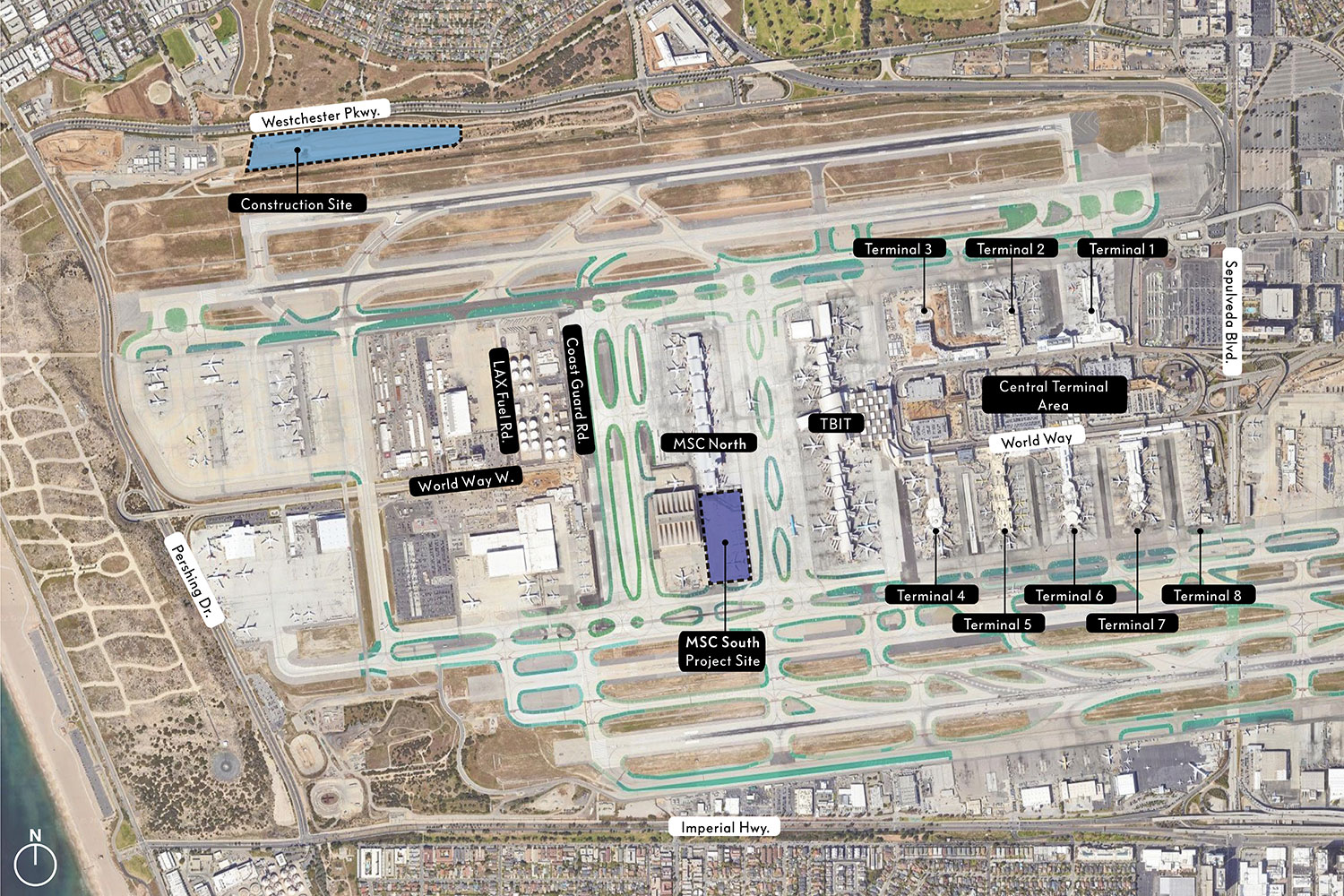
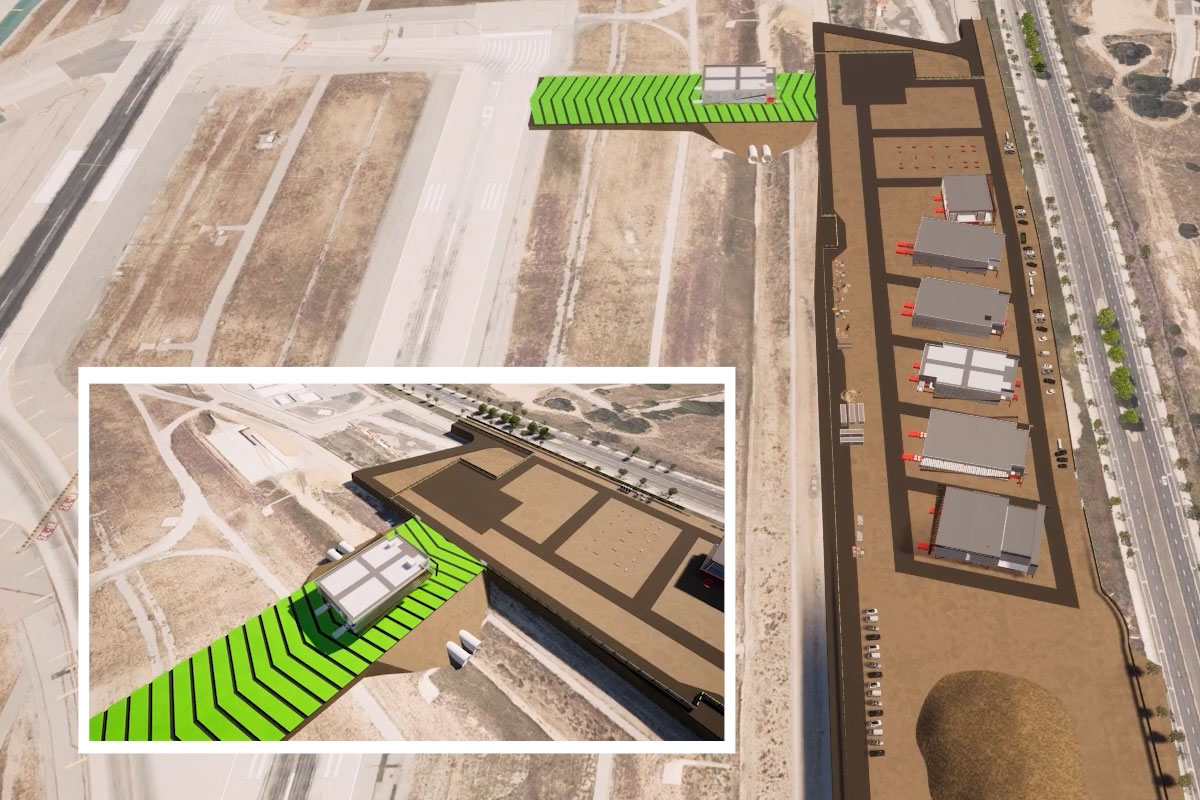
MSC South presented significant logistical challenges due to its location on an active “airport island,” where continuous runway operations meant every equipment or movement risked disruption. Our team took the challenge and implemented the Offsite Construction and Relocation (OCR) method, first of-its-kind at LAX.
The OCR technique involved constructing the concourse in an offsite yard, then relocating the completed structure to its permanent site, avoiding major on-airfield assembly and crane use. It was selected over prefabrication as the only approach that fully met LAWA’s goals for safety, quality, and minimizing airfield disruption.
“The OCR technique builds the building off-site on temporary foundations and then moves the structure to its permanent location, setting them down on new foundations. Simply put, it’s ‘build the house and move the house,’” says VP of Preconstruction Brian Rush. “The benefits are time savings; improved-quality building in a controlled environment; and improved safety due to bringing less material, equipment and labor onto the active airfield.”
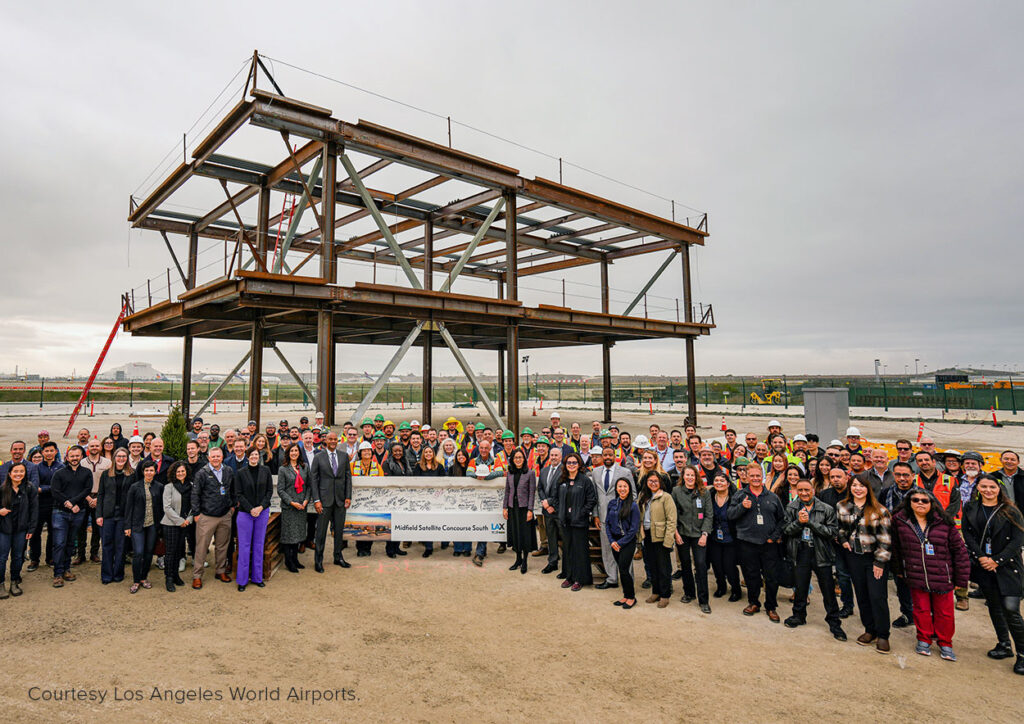
The project also required extensive planning and permitting, including coordination to cross the federally protected Argo Ditch (see Gallery), with approvals from multiple agencies and construction of a temporary land bridge in under 45 days. The concourse was built in nine segments nearly two miles away while foundation and utility work progressed on-site.
The success of the OCR method highlights the importance of early planning, stakeholder coordination, and innovative construction strategies in delivering complex infrastructure within one of the world’s busiest airports. “When you are about to embark on something that your firm has never done, especially something that no contractor has ever done at LAX, the planning and preparation is paramount to success of the outcome,” describes President Mike Byrne. “This is true for any project, but even more so at a critical, high-volume international airport because of the quantity of stakeholders and the risks of working on an active airfield.”
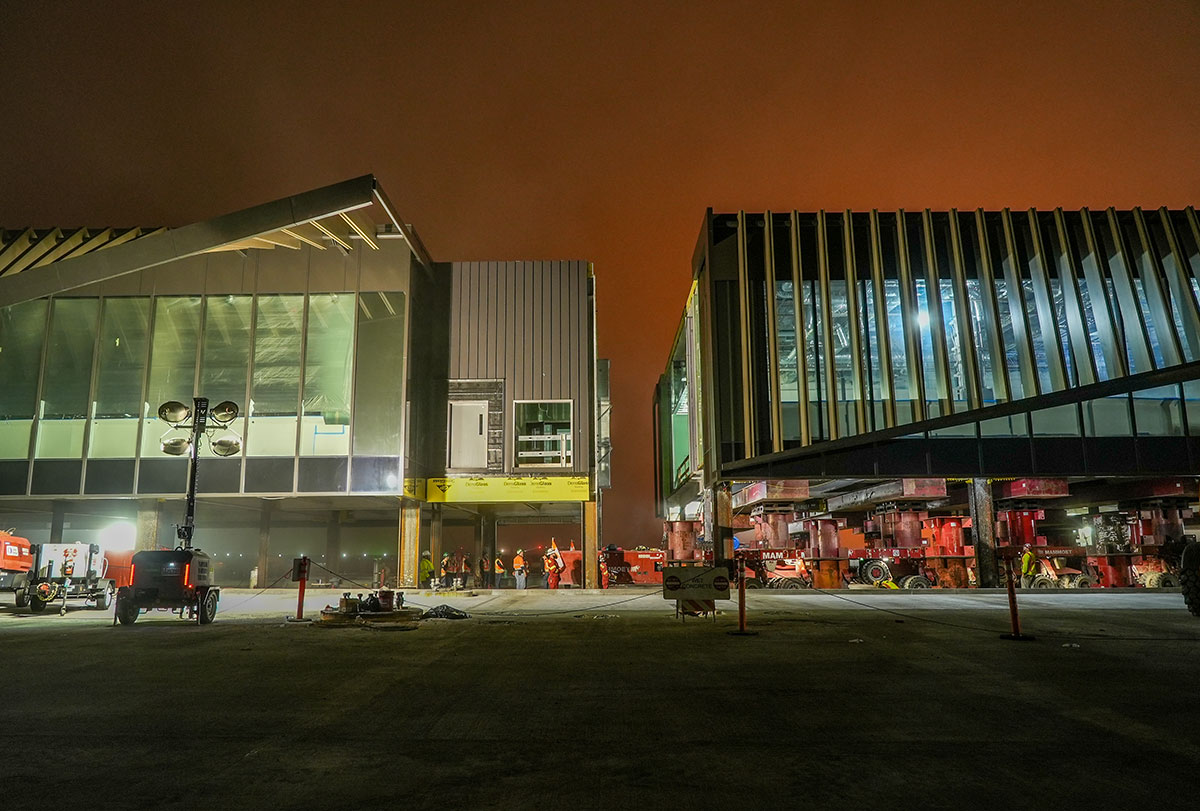
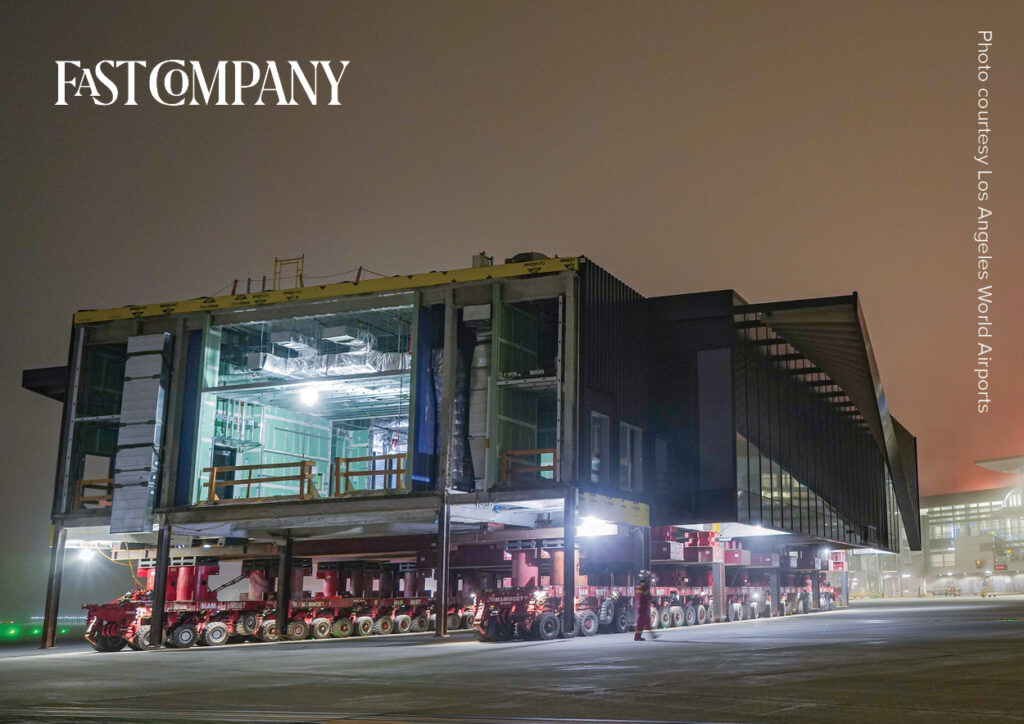
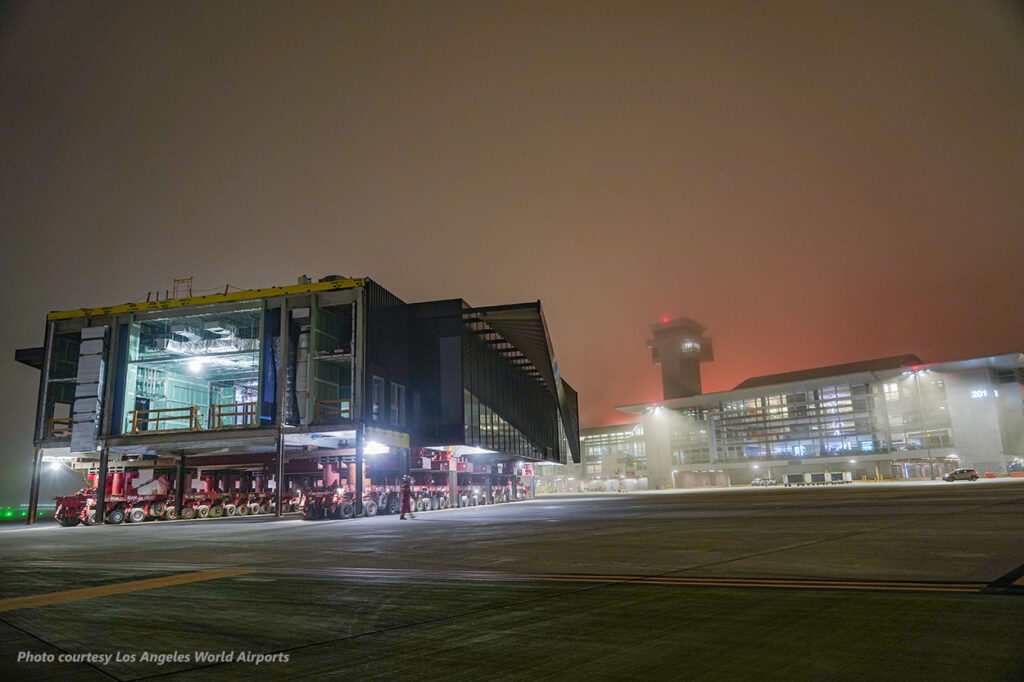
In October 2024, together with Los Angeles World Airport’s team, a highly coordinated, first-of-its-kind airfield relocation of MSC South was completed. Using Self-Propelled Modular Transporters (SPMTs), the nine large structural segments were carefully moved across active runways over the course of a month-long operation.
The effort required more than a year of planning and coordination with over 100 stakeholders and regulatory agencies, with every movement sequence reviewed in detail to ensure safety and operational continuity at one of the world’s busiest airports. Despite challenging conditions such as low visibility and nighttime airfield operations, the precision paid off, and the planning held.
“The precision preplanning resulted in zero adjustments to the foundation system outside the use of a ‘come-along’. We had approved engineering for field adjustments in the event an anchor bolt was off, but we hit every mark,” Project Executive Jim Nelson.
“The first night was electrifying,” John shares. For those on the ground, the experience was unlike any other. Our CEO was part of the “Foreign Object Debris (FOD) Squad” on the first night, walking the runway behind the moving segments to ensure nothing was left on the airfield. “The team with LAWA spent over a year meticulously planning and they took firm control of operations during every night of the move, guiding over 100 stakeholders through each step to ensure flawless execution,” John added.
The success of the Offsite Construction and Relocation (OCR) method, executed entirely off-site before transport, demonstrated a breakthrough in airport construction logistics, minimizing disruption while enabling safe, efficient delivery within an active airfield environment.
Brian shares, “The actual move was the culmination of years of planning and coordination. Actually moving the building was really like a celebration of the years of planning that led up to that moment.”
MSC South is designed to achieve LEED® Silver certification and reflects California Modernism, featuring a brise soleil inspired by iconic Los Angeles architecture. Designed by Woods Bagot, the concourse also incorporates long-term adaptability for future repurposing.
Beyond its footprint, the project had significant workforce impact, exceeding 30% local participation. Jim shares, “The OCR yard approach allowed 84 disadvantaged workers who cannot work airside to work on the project. I know our project put thousands of people to work, which helped contribute to our local economy and make the lives in our community better.”
MSC South represents a landmark achievement in complex airport construction, combining sustainable design, inclusive workforce development, and innovative delivery methods. Completed in our centennial year, it reflects a century of resilience, innovation, and consistent excellence in execution.
Read the full article on page 111 on DDC’s website here, or view the PDF of the article here.