
CREJ: Mike Hockett's Expert Insights on Adapting to Hybrid Retail
Our Industry
Read More

Celebrating 100 Years of integrity, innovation, and lasting relationships: valuing people, building dreams!


Celebrating a CENTURY of valuing people and building dreams!
This once-in-a-lifetime milestone is made possible by the commitment of our employee-owners and through relationships built over time with our clients and partners.
Kevin and Chris shared their insights on managing rising construction costs through early contractor involvement.

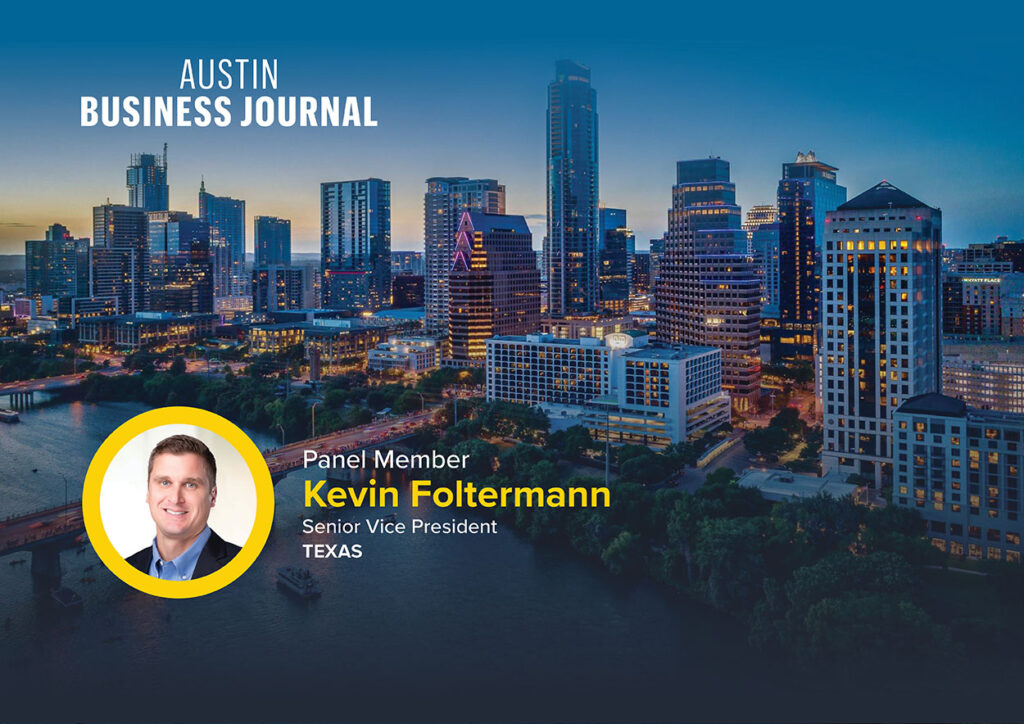
Austin Business Journal tagged Senior Vice President Kevin Foltermann and Senior Preconstruction Manager Chris Ameika to discuss rising construction costs in Texas and how early contractor involvement can help owners reduce budget and schedule risks.
As W.E. O’Neil’s Texas operations leader, Kevin leverages 20+ years of construction expertise helping clients bring complex commercial developments to market across Central Texas.
Chris has 25+ years of experience partnering with major owners and developers to estimate and deliver complex, high-profile projects in Texas and across the country.
Read the full interview below.
Construction costs rarely move for just one reason. Tariffs, material prices, labor availability, equipment shortages and demand from major projects can all affect a project’s budget and schedule, sometimes in ways that are difficult to anticipate several months in advance.
For developers and owners planning projects in Texas, that makes early planning increasingly important. W.E. O’Neil’s preconstruction team discusses what’s driving today’s cost pressures and how owners can get ahead of rising costs, procurement challenges and schedule risk.

Kevin Foltermann, Senior Vice President
What are you seeing in the Texas construction market right now when it comes to project costs, material availability and schedules? And how does today’s pricing compare with estimates developed two or three years ago?
KEVIN FOLTERMANN: Every project is different, but an estimate prepared three years ago could reasonably be 10% to 15% lower than today’s costs. If the building has a significant structural steel component, the increase could be more. I wouldn’t rely on a budget that’s more than 12 months old without revisiting it.
CHRIS AMEIKA: We are seeing increases in material pricing, including lumber, copper, stud framing, structural steel with broader cost impacts from increasing fuel prices. Some materials, such as structural steel, are approaching the post-COVID 2021 highs. AI and data center demand is also driving supply-chain constraints for some materials.

Chris Ameika, Senior Preconstruction Manager
Subcontractor interest really depends on the market. We recently broke ground on a large multifamily project that we priced in July 2025, and for the most part, all the subcontractors held their pricing for almost a year.
KEVIN FOLTERMANN: I would say that is true in the multifamily market because there are not as many opportunities. But in the retail market, which is booming right now, you’re not seeing the same willingness to hold those numbers. There are plenty of opportunities, and some subcontractors are at a point where they cannot take on any more work. As a result, their numbers are escalating.
Where are customers most likely to be surprised by the difference?
KEVIN FOLTERMANN: We’re starting to see multiple developers kick around office projects that have been put on the shelf. Some are changing their approach to previous designs and considering redesigns to help push an office project forward. Some are reducing the office size or changing the product type in an effort to make the numbers work.
Much of the office activity we are seeing is in Austin-area suburbs rather than the downtown business district. There is demand for Class A office space in communities such as Round Rock and Cedar Park, particularly among companies that want to be closer to where their employees live.
How much of today’s cost pressure is being driven by tariffs, versus labor shortages, wage escalation, supply-chain constraints and demand from major projects such as data centers?
CHRIS AMEIKA: In a lot of the conversations I’ve had, material escalation is really the driver. Until recently, a lot of subcontractors said tariffs had very little impact on price escalation. It was commodities, supply and demand. That said, considering the ever-changing policies, tariffs may still have a significant impact on specific products, and it’s important to keep an eye on them. An example of this is aluminum windows and frames. Prior to April, tariffs primarily affected raw materials. Since April 2026, the tariffs have been applied to the full customs value of the imported product which impacts some of our projects throughout the country, especially high-rise buildings with complex aluminum glazing systems.
KEVIN FOLTERMANN: Tariffs have not been as bad as originally anticipated for the product types we’re building in Austin as of late. What we’re really seeing in Texas is the effect of data centers.
They’re being built by trillion-dollar companies that don’t have the same budget constraints as commercial real estate developers. They’re concerned about how fast they can get these data centers online versus the budget, so they’re willing to pay an extreme premium to lock in labor and incentivize subcontractors.
Some of our longtime trade partners have landed several data center jobs, and they’re unable to take on any more work. Their crews and their equipment are tied up.
How is the rapid growth of data center construction affecting the availability and cost of materials and skilled labor for other types of projects across Texas?
KEVIN FOLTERMANN: It’s affecting steel and equipment, including cranes. Cranes are hard to come by throughout the state right now because of data centers. We’re seeing cranes come in from out-of-state locations to do projects in Texas, and equipment availability isn’t what it was.
The larger, more sophisticated trade partners are the ones getting pulled into the data center market. There are still good, viable partners available, but some of the well-known major trade partners are being sourced to staff those projects.
CHRIS AMEIKA: The subcontractor community is not limited to Austin. The “Texas Triangle” covers a lot of area and many of the subcontractors we’re working with serve all those markets, so they have opportunities elsewhere. That becomes a risk for Austin projects competing for resources.
What are the biggest mistakes you’re seeing businesses make when trying to manage rising construction costs and price uncertainty on their own?
KEVIN FOLTERMANN: Time is definitely not on your side when it comes to price uncertainty. Once you have a committed price, the faster you can move forward, the better you are in today’s market.
One of the biggest mistakes we see is owners waiting until design is complete to bring a contractor into the process. You don’t want to develop a project in a vacuum with your design team and then expect a competitive bid to solve issues related to constructability, material availability or cost escalation. Whether or not you formally engage a contractor for preconstruction services, you should be looping them into the conversation early.
On the most successful projects we’ve delivered, we were engaged throughout the process, providing constructability reviews and design-assist input from major trade partners. That collaboration helps ensure the systems being designed are appropriate, cost-efficient and meet the project’s goals, while giving owners more opportunities to manage risk before it impacts the budget or schedule.
Are there any materials, equipment or scopes that clients should be thinking about procuring or locking in earlier than they traditionally would? How do you determine when early procurement makes sense?
CHRIS AMEIKA: HVAC lead times are important. Owners should also look closely at anything sourced overseas because of transportation time, costs and potential tariffs.
Items such as glazing, curtain wall and window wall are also worth evaluating for early procurement, especially when they are sourced overseas. Committing to those materials and trades early can help lock in pricing and potentially avoid future increases, but it can be a double-edged sword if tariff conditions change.
KEVIN FOLTERMANN: It gets back to the critical items in your schedule, particularly your major mechanical, electrical and plumbing systems. Early procurement is not as simple as placing every order ahead of schedule. Vendors may only store materials for a limited time, and the owner may have to accept possession and arrange storage. Deposits can sometimes lock in material pricing while labor and fabrication are purchased later, but that decision must be evaluated product by product and supplier by supplier.
One useful option is a phased guaranteed maximum price, or GMP. Instead of waiting to establish one final construction price for the entire project, the team can authorize early packages for priority scopes while design continues on the remainder of the building.
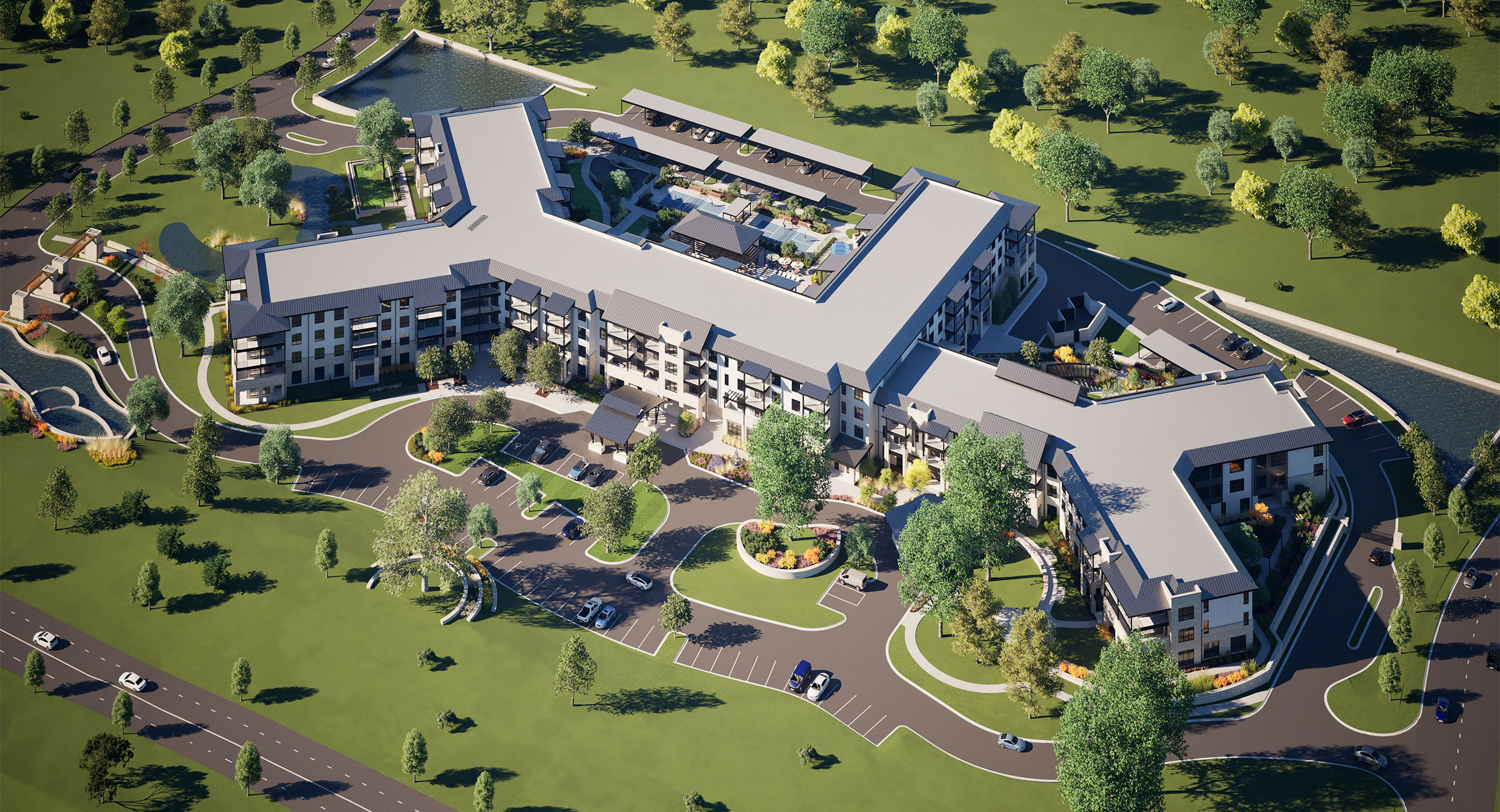
The Statesman at Horseshoe Bay, a 314,000 SF premier senior living community set to rise in Horseshoe Bay, Texas, in partnership with Falcon Senior Housing.
Do you have any recent projects that illustrate the value of early planning and procurement? Were there specific decisions made during preconstruction that helped protect the project’s budget or schedule?
KEVIN FOLTERMANN: On our Senior Housing project — The Statesman at Horseshoe Bay — we phased the project so the earthwork and utility work could begin ahead of building construction.
The owner didn’t have the full loan finalized, but they were able to self-fund the earthwork and site utilities. That decision protected the schedule, allowed site work to begin immediately and created roughly three months of progress before the remaining financing was finalized. Rather than waiting for 100% of the loan to close, the project flowed directly into building construction.
On another mixed-use project, the owner awarded the precast parking structure package early to lock in pricing. That enabled the garage to be available when the overall project moved forward about a year later, ensuring the owner secured a major component of the project at the previous year’s pricing.
If you were advising a Texas developer who is six to 12 months away from breaking ground, what should they be doing right now to get ahead of rising costs and protect their budget and schedule?
KEVIN FOLTERMANN: First, engage a general contractor to provide current pricing and budgeting assistance. Ask how old the working budget is, whether it reflects current conditions and when it should be updated again.
In terms of saving the owner money, value engineering — the process of evaluating alternative materials or systems to improve value without sacrificing performance — is best done during the design phase. That’s where you get the most bang for your buck. The greatest opportunity occurs during design, when alternatives can be incorporated thoughtfully. Waiting until bids come in over budget and then asking for cheaper options rarely produces the best value.
Ultimately, managing escalation comes down to creating options before they are needed. The earlier the owner, design team and contractor establish priorities together, the more opportunities they have to manage cost, procurement, and schedule risk.